Services

Cost Control

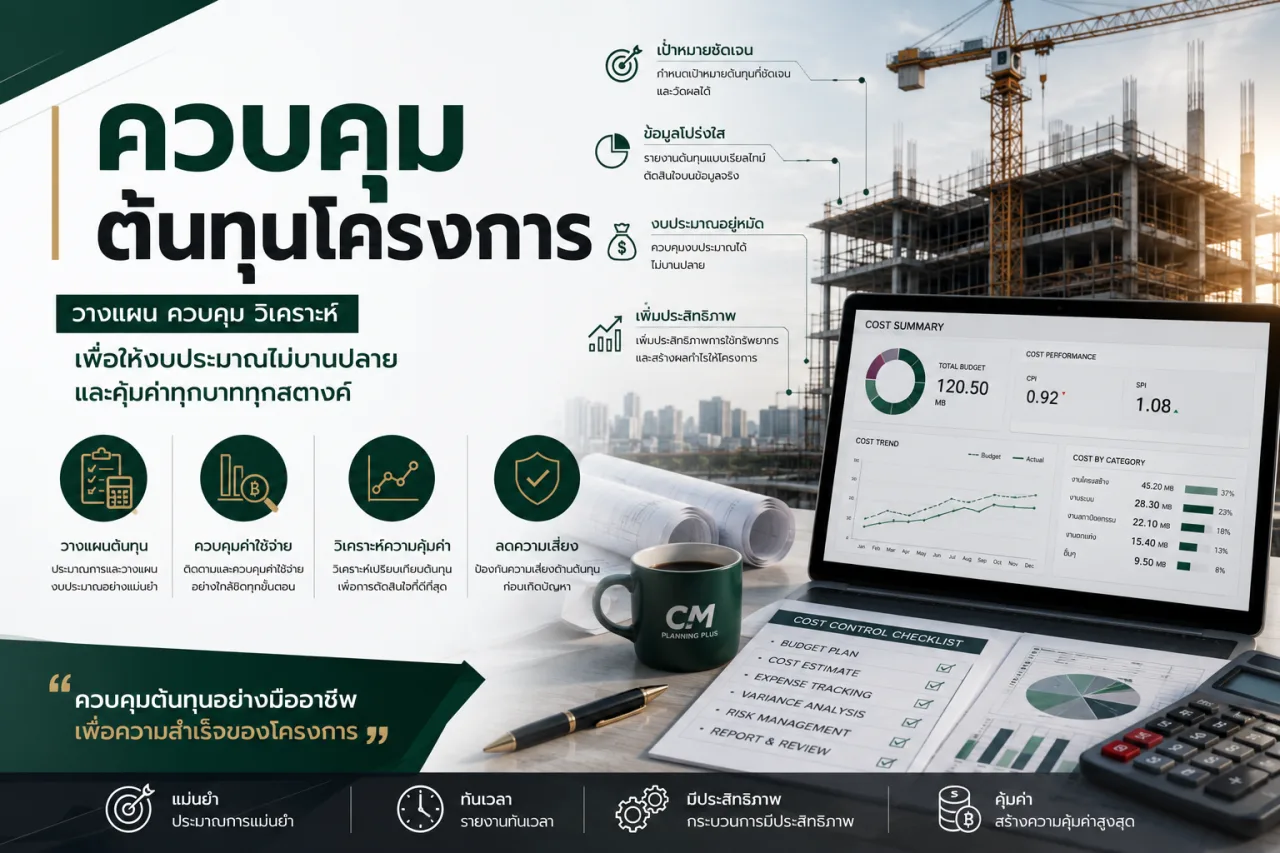
Monitor budgets, commitments, actual costs, changes, and forecasts so emerging cost exposure is visible before it compromises project objectives.

0 views
ควบคุมต้นทุนโครงการ
Featured

Service Details

Service Information and Scope

Problem / Need

Cumulative expenditure alone does not provide cost control. Commitments, pending changes, and emerging risks may not yet appear in accounting records. If these are not connected to budget and forecast, management may discover an overrun only when few corrective options remain.

Scope of Work

Structure budgets and cost codes for effective monitoring. Consolidate budget, commitment, actual cost, change, and forecast information on an agreed cycle; analyze variance and trends; support change management and appropriate cash-flow forecasting; and report facts, assumptions, and risks clearly. This is project cost control, not accounting or audit work.

Deliverables

  • Cost breakdown structure and control budget

  • Commitment and actual-cost register

  • Change and cost-risk register

  • Cost variance and estimate-at-completion report

  • Cash-flow forecast where included in scope

Process

We review budgets, contracts, cost codes, and data sources; establish the control baseline and rules for commitments, actuals, and changes; verify completeness each cycle; analyze variance; update the forecast; and highlight actions or approvals. Forecast assumptions remain documented and traceable.

Suitability

Suitable for owners, developers, contractors, and management teams that need a coherent total-cost view, projects with multiple contracts or frequent changes, and teams whose budget, procurement, accounting, and forecast information is disconnected.

Frequently Asked Questions

Common Questions About This Service

How is Cost Control different from BOQ/QTO?
BOQ/QTO focuses on measured quantities and work-item structure. Cost Control uses budgets, contracts, commitments, actuals, changes, and forecasts to manage cost performance throughout the project.
Can cost control begin after construction has started?
Yes. We first establish a current position from the budget baseline, contracts, commitments, actual costs, and changes at an agreed cut-off date, then implement the ongoing cycle.
Is accounting data alone sufficient?
Accounting data is essential, but commitments, work performed but not invoiced, changes, risks, and forecast assumptions are also needed for a more complete view of final cost exposure.
Can cash-flow forecasting be included?
Yes, where schedule, payment terms, and forecast information are available. A cash-flow forecast can support funding plans, but it is not an accounting or financial assurance service.

Have a project challenge?

Review your project cost position

Discuss your budget structure, data sources, and current cost concerns so we can define a suitable monitoring and forecasting approach.